

Project PI Interview | Protein Pioneer: Professor Thomas Knowles
Created on:2025-10-22 16:00
Project Introduction
"Engineering and biological application of droplet microfluidic platform"project is oriented to the biological and health industries, and will build a microfluidic platform in the center to form a unique single-cell sequencing method based on microfluidic technology, the preparation technology of functional pharmaceutical microspheres and a prototype that realizes the integration of high-throughput microfluidic screening, etc., from microfluidic technology on a research scale to manufacturing and production on an industrial scale, it will also cooperate with local enterprises in the fields of biological materials, single cell analysis, drug discovery, tissue engineering and other fields to establish formal biotechnology business entities and seek to use research results for commercial purposes.
Thomas Knowles, the project leader, is Professor of Physical Chemistry and Biophysics at the University of Cambridge's Department of Chemistry and Cavendish Laboratory, and co-director of the Cambridge Misfolding-Related Diseases Centre. He is also the 2019 Cambridge Enterprise Academic Entrepreneur of the Year.
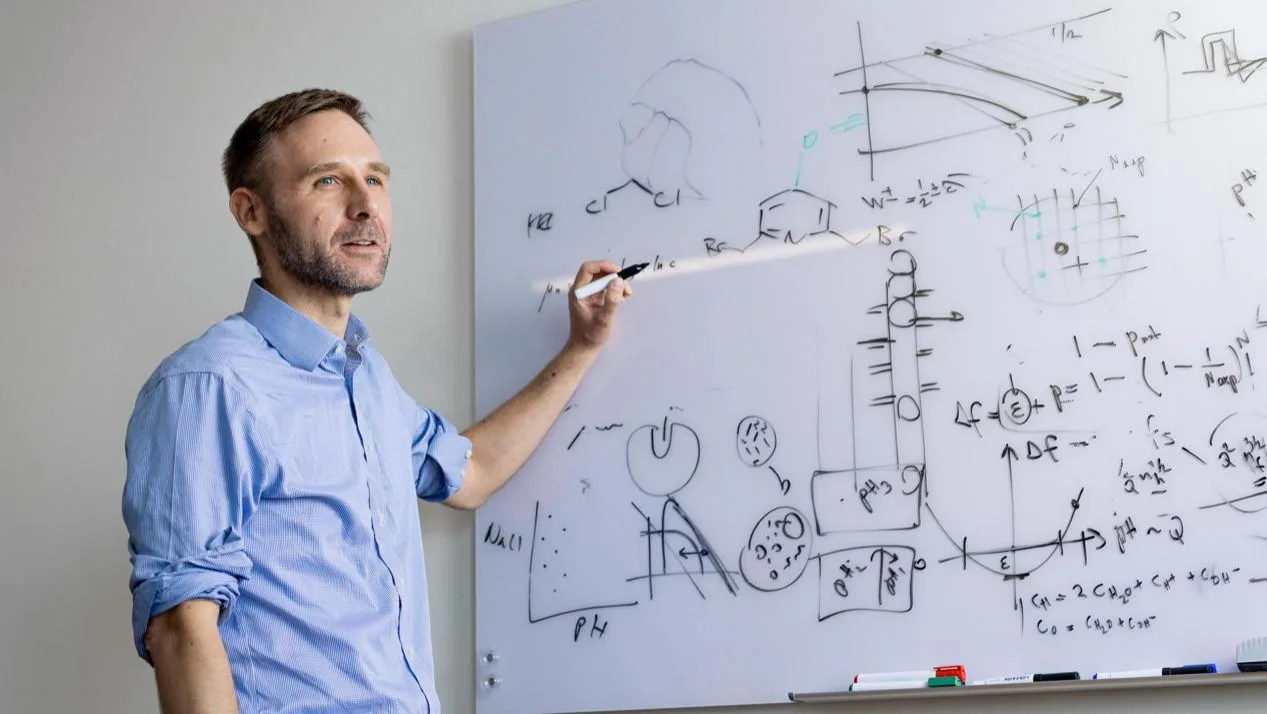
character introduction:
Professor Thomas Knowles (Tuomas Knowles) is one of the world's leading experts in protein science and has founded five spin-off companies dedicated to applying breakthroughs in protein science to solve practical problems.
Corporate Mission:
replacing highly polluting plastics with plant-based materials;
the application of basic biological principles to drug discovery;
developing organ-specific gene delivery solutions;
development of treatments for neurodegenerative diseases;
helps scientists unravel protein-protein interactions with innovative tools.
core driving force:
"provide scientific answers to the fundamental challenges facing the ecological health of people and the planet today."
you embark on scientific researchindustrialization?
I have always been interested in scientific research that can solve major social problems. In practice, we have explored two paths: one is to cooperate with mature enterprises. We have established fruitful partnerships with many industry leaders, including many leading pharmaceutical companies. This cooperation model has benefited us a lot-both sides have developed their strengths and worked together.
However, especially when faced with new technologies, the work carried out in universities has not yet reached the stage where industry partners can directly participate. The research team has to do a lot of basic work on its own to advance it to a scalable stage. In this case, we find that the creation of a spin-off company works well.
do you enjoy the process of starting a company?
of course. Starting a company is extremely exciting. Technological innovation itself is full of charm, but the team is equally important. It's really exciting to be able to build a team that understands both science and business operations.
now you have started five companies. Looking back on starting your first company, what did you wish you had understood at the time?
in fact, most of the advice given to you is right. In the final analysis, the most important thing is to find like-minded people. It's a great pleasure to work with the best in all fields. However, if you realize in advance that starting a company is really time-consuming and will eventually occupy your life, you may be better prepared. But it's really fun!
how you see yourself as a scientist,entrepreneurs,oris a "science entrepreneur"?
my main contribution is still focused on science and technology-thinking about how technological advances can open up new markets, and how we can achieve large-scale applications. Therefore, I am still a researcher with scientific and technological innovation as the core. I still spend most of my time at the University of Cambridge leading research teams, thinking about basic research and how to push the boundaries of understanding of biomolecular systems.
this area is developing rapidly. Modern protein science has been around for almost fifty years, with a large part of the breakthrough taking place in Cambridge. So far, the scientific community has focused on single-molecule research-how proteins fold, misfold, what structures they form, and what properties they exhibit. But we 've come to realize that most proteins are actually "social molecules". They tend to interact and work together to complete life activities.
it seems to me that the next 50 years of protein science will not focus on individual molecules, but on molecular systems-because it is at this level that function and disorder arise. Fundamental science is coming at an exciting time: we are discovering new phenomena and entirely new principles with profound implications for human health, the ecology of the planet, and materials science.
Which spin-off company are you most optimistic about at the moment?
I startXampla. This project was inspired by our lab's understandingspider silk. Spider silk is stronger than steel at the same weight, while being extremely elastic. What's even more amazing is that spiders can produce this material at room temperature with almost zero waste simply by eating a fly-this is simply the ideal paradigm for sustainable materials.
as scientists, we want to understand its mechanism of action, and after we have mastered the principle, we begin to explore the possibility of adjustment or replication. When the technical feasibility is verified, we try to use natural proteins to produce materials with similar properties, but completely biodegradable, to replace disposable plastic packaging.
but you can't produce goods directly in a university laboratory. Obviously, in order to further develop this technology, the establishment of a company has become an inevitable choice. We start from market research and accurately grasp the needs of the industry-companies are generally looking for plant-based material solutions based on the development of waste raw materials. However, the basic research in the field of plant protein self-assembly was almost blank at that time. So our chief technology officer, Marc Rodriguez, spent another year in the lab, systematically studying the behavioral properties of key plant proteins.
now, Xampla has launched a seriesdegradable plant-based packaging materials, including the world's firstplastic-free barrier coating for paper packaging.
what about the latest spin-off company, Transition Bio?
this is an exciting collaboration we have with Harvard University. Advances in microfluidics and microscopic imaging technology have allowed us to gain insight into processes within living cells and how they self-organize. One of the key mechanisms involves so-called "disordered proteins"-they lack a fixed structure but can act as "hubs" to polymerize other proteins. Many diseases actually stem from these "hubs" being incorrectly assembled where they shouldn't be.
we asked ourselves: Can we figure out how these proteins aggregate and interact? If we can, it would be possible to design molecules to correct erroneous aggregates. As we develop this technology, we need to bring in people who have the ability to turn molecules into drugs. As a result, the founding of the company was the next step in advancing this technology. Our co-founders are from Harvard University and Cambridge University School of Clinical Medicine.
Cambridge's environment help these companies get off the ground?
Cambridge Enterprises (Cambridge Enterprise) gave great support, especially on intellectual property protection and related strategies. Their seed funding has also helped us tremendously in the early stages.
How has Cambridge's innovation ecosystem changed over the past decade?
I think the biggest change is--students' interest in entrepreneurship and translational research has increased significantly. In the past, I had to explain why you might want to consider entrepreneurship or the transformation of scientific research results; but now students are fully aware of the importance and opportunities of innovation, which is undoubtedly a very positive trend.
what are you most proud?
I'm most passionate about the future and excited about the potential we have to advance these technologies. Among the achievements that have been achieved, the most satisfying is the journey from "no clue" to "a flash in the laboratory", and then to "really go to the world and really change people's lives. I'm proud of that and proud of helping others along the way. It's just wonderful to see the team thrive on a common goal. In short, what I am most proud of is our innovative ideas and the people who work with me.
have you ever had a setback?
in fact, every step is not easy. Scientific problems can often be solved-research risks are something we can understand and manage. But business risks are much more complex and must rely on the right people to deal with them properly.
colleagues think are your greatest strengths?
I think they'll say I'm passionate about science, and especially passionate about understanding how things work at the most fundamental level.
What advice do you have for people who want to start a business?
do it. It's exciting, it's very interesting. It will also let you learn a lot. Make sure you have the right partner.
of such busy work? If so, how do you arrange it?
free time is reserved for my lovely family.
Apart from leading research teams at universities, supporting company operations, and working with industry partners, I have almost no real "leisure". But this is my choice. It is a kind of luck to be able to devote myself to the career I love.
quick answer
optimists or pessimists?
is definitely an optimist. When you see the progress that has been made and the possibilities for the future, it's hard not to be optimistic.
value talent moreorcreative?
both are important, but creativity comes from people, so I choose talent.
punctual or often late?
wish to be punctual, but the reality is that I am often in a hurry.
paid attention.Cheng orresults?
as a basic scientist, I love the discovery process. The result is certainly a sense of accomplishment, but the process is more exciting.
team work or go it alone?
only teams can make progress. Teams must be diverse, including diversity of disciplinary backgrounds, cultural perspectives and ways of thinking-and teamwork is more fun.
risk appetite or risk aversion?
is necessarily taking risks. You can never break through without trying, and you can gain valuable experience even if you fail.
focus on the whole or the details?
want both. The details have to pass, but what really excites me is understanding how the details build the panorama.
luck a godsend or a self-made?
may be both. As Pasteur said, "Opportunity favors a prepared mind." The more in-depth study, the easier it is to find the law of things, so as to make progress.
Work First or Work-Life Balance?
life-work balance is essential, it is difficult to achieve true success and satisfaction in either field. But this balance varies from person to person-I am fortunate to be involved in many exciting causes, which is the ideal state of my life.
The content of this interview is transferred from the official website of Cambridge University. Please click "read the original" at the end of the article to view the original text.
original web site link: